
Updated November 22, 2026
Metal roofs vs. shingles: what is the difference?
The biggest difference is how the materials are assembled and maintained. Metal roofing uses joined panels or metal shingles; asphalt uses layered, overlapping shingle courses. Homeowners often compare metal's appearance and long-term durability potential against asphalt's lower upfront cost.
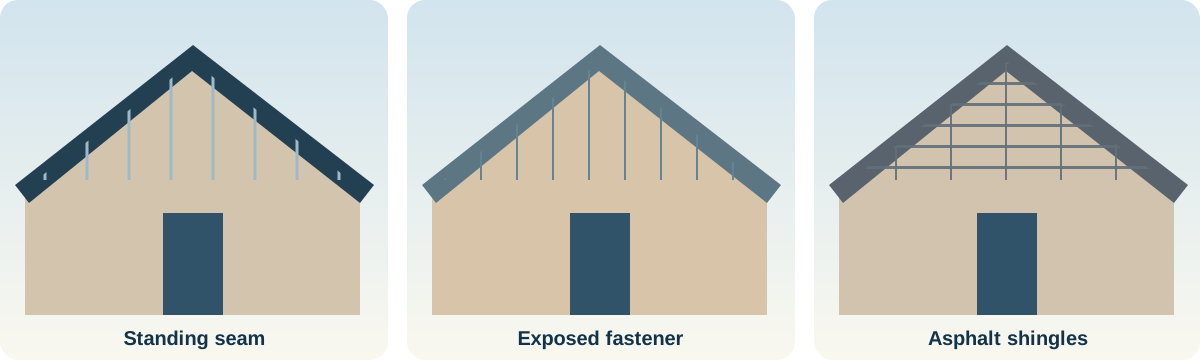
Illustrations for visual education, not specific manufacturer products.
| Topic | Standing seam metal | Architectural shingles |
|---|---|---|
| Appearance | Smooth vertical lines, raised seams | Layered and textured |
| Fasteners | Generally concealed within system | Typically concealed under overlapping courses |
| Upfront cost | Usually higher | Usually lower |
| Routine care | Inspect seams, flashings, damage and coating | Inspect shingles, flashings, granule loss and wind damage |
| Installation | Requires trained system-specific detailing | Widely familiar among roofers |
| Service life | Varies widely by product and installation | Varies by shingle type, exposure and installation |
What does exposed-fastener metal look like?
Unlike standing seam, some ribbed or corrugated panels are attached through the panel with visible screws and sealing washers. They are often seen on barns, workshops and some homes. Ask your installer how the fasteners should be inspected and maintained over time.
What works best on an Asheville mountain home?
Roof pitch, wind exposure, snow shedding locations, tree cover, drainage and budget are more useful decision factors than the word “best.” In Western North Carolina, it is especially worth discussing gutter details, falling branches and snow movement above walkways.
Does metal roofing make sense if you plan to sell soon?
The extra initial cost may or may not be recovered in a short ownership period. Compare written bids and likely ownership horizon instead of counting on a specific resale premium.